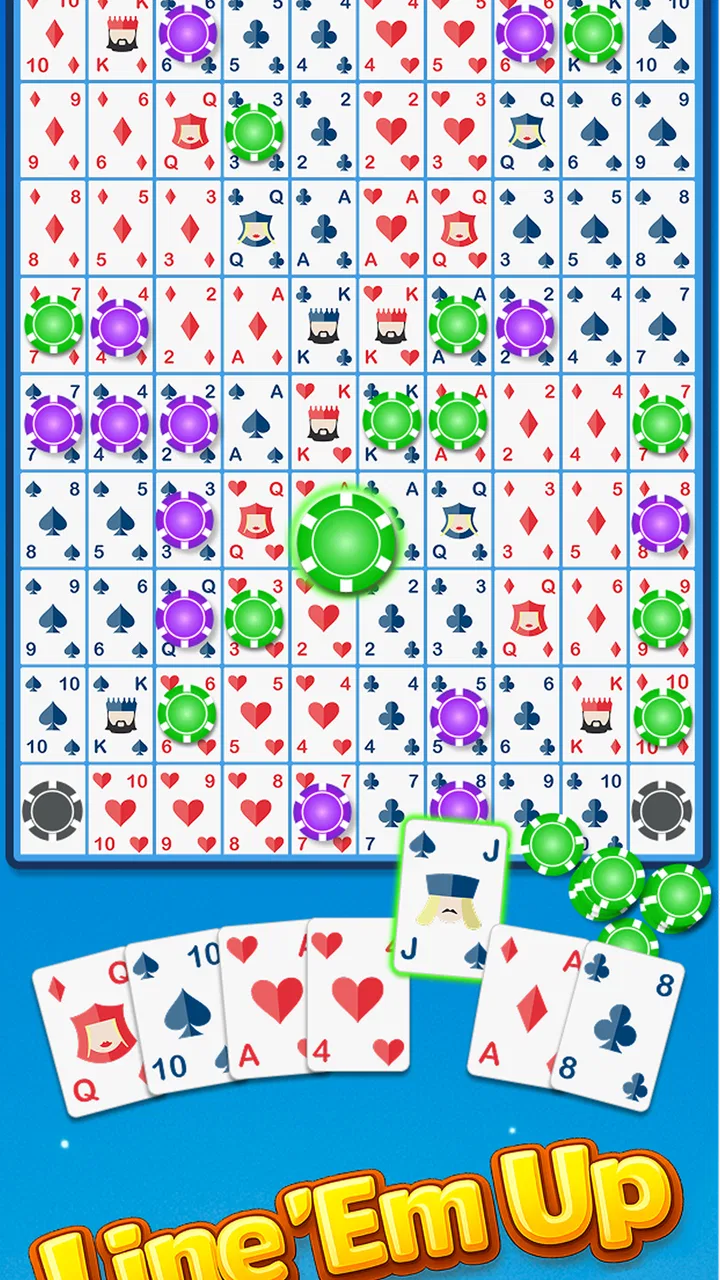
Line 'Em Up®: Strategy Board
- 3.7
- Rating
- 10.00K
- Installs
- Free
- Price

 Analysis by App-foxy
I like board games that are simple to understand but difficult to play well, and Line 'Em Up® sits in that appealing space. It is a free strategy board game from Schultz Development ApS, built around short decisions rather than a long rulebook or a complicated collection of systems. The basic idea is easy to grasp: place your pieces with purpose, read the developing position, and try to outsmart the other player before the board turns against you.
That simplicity is also the reason I think this game deserves a closer look. It is not trying to replace a large digital board-game library, and it does not offer the spectacle of a modern action title. Instead, it focuses on the small tension that makes traditional tabletop games work: one move looks harmless, then suddenly changes the value of every space around it. I found it most enjoyable when I treated each turn as a problem to solve rather than rushing to make an obvious move.
The game is available at no purchase cost and is rated for Everyone, which makes it easy to suggest for casual play with family or friends. Its store summary highlights live matches as well as games with up to a day per turn, so it can suit both people who want an immediate contest and players who prefer to think between sessions. There are optional in-app purchases ranging from $1.99 to $99.99 per item, something worth remembering before handing the device to a child or using the game as a completely cost-free pastime.
You May Also Like

 Blood Strike: 2.5 Anniversary
Blood Strike’s Loadouts Turn Every Drop Into a Tactical Gamble
A close look at Blood Strike’s custom loadouts: how fast access to signature weapons reshapes its battle royale rhythm, rewards preparation, and narrows the gap between fights.

 Pandora - Music & Podcasts
Pandora’s Music Is Easy to Start, but Harder to Recover
Pandora’s strength is its low-effort path from a seed to a station. Its weak spot is how much confidence it asks you to place in connection, setup, and quiet recovery.

 8 Ball Pool
 Is Built on Rivalries, Rematches, and Routine
A close look at the rivalries, rematches, shared routines, and unanswered safety questions that turn a quick pool match into a persistent mobile community.

 Samsung Music
’s Quiet Strength Is Playing What You Already Own
Its reach comes less from spectacle than from dependable access to a personal library. That simplicity is both the app’s strongest retention engine and its ceiling.

 AccuWeather: Weather Radar
AccuWeather Review: A Quick, Clear Forecast for Everyday Decisions
For everyday plans, the best forecast is the one you can understand quickly. AccuWeather makes rain timing, radar, and local conditions easy to act on, with a few trade-offs.

 Hill Climb Racing
Why Hill Climb Racing Still Turns Crashes Into One More Run
A tiny car, a bumpy hill and one more upgrade: Hill Climb Racing keeps resurfacing because its simple chaos makes every near-miss feel personal.
More From Our News Desk
View All News


How the current version feels in everyday play
My first impression is that Line 'Em Up® works best when two players are looking for a focused contest rather than a noisy multiplayer hub. The board-game format gives every placement weight. Even if you are playing casually, you quickly start checking possible lines, blocking opportunities, and asking whether a move helps your own position or merely reacts to the opponent.
The live option is the natural choice when both players are available at the same time. It creates a more social rhythm, especially if you are sitting with a friend or chatting while playing. The longer-turn format serves a different purpose. A match that allows roughly a day for each turn can fit around work, school, travel, or different time zones. I would use it with someone who enjoys strategy but does not want another game demanding constant attention.
That distinction is more important than it may sound. Many mobile board games are enjoyable only when everyone is online together, while others lose their energy when turns are spread too far apart. Here, the two approaches give the same core experience different moods. Live play feels like a quick duel; extended turns feel closer to a correspondence board game, where the position can stay in your thoughts after you put the phone down.
The strongest part of the experience is the pressure created by limited attention and limited space. You are not simply filling empty positions. You are trying to create a threat without revealing too much, while also preventing the other player from building an answer. That makes a seemingly defensive turn potentially valuable, particularly when it forces the opponent to abandon a plan.
I would not describe the game as relaxing in the same way as a solitary puzzle. Even when the rules are approachable, another person is actively trying to exploit your mistakes. That makes it a better fit for players who enjoy competition and replaying a position mentally. If you want a game that can be played with almost no concentration while watching television, this is probably not the ideal choice.
Learning the board without wasting early matches
The most useful way to learn is to resist the urge to chase every immediate opportunity. In my experience, new players often focus on making their own line and overlook the fact that a move can open a better route for the opponent. I recommend using the first few turns to identify which spaces influence several future possibilities, then treating those spaces as strategically important even when they do not complete anything immediately.
A practical habit is to inspect the opponent’s position before deciding what your own move should accomplish. Ask three questions: what can they threaten next, which of your options would force them to respond, and whether your planned move creates a weakness elsewhere? This routine is more valuable than memorizing a fixed opening because the board develops differently from match to match.
Another useful tip is to separate a blocking move from a wasted move. Blocking is worthwhile when it removes a genuine threat or changes the opponent’s choices. It is less useful when you react to a possibility that still requires several unlikely steps. Learning that difference is where the game becomes more interesting. You begin to play for tempo and flexibility instead of simply answering the last move.
For a family match, I would explain the basic objective first and avoid giving a long strategy lecture. Let the first game reveal why central or flexible positions matter. Afterward, discussing the turning point is a good way to help a younger player improve without making the session feel like a lesson. Because the age rating is Everyone, the game can work across age groups, but the competitive experience will still depend on how evenly matched the players are.
Live matches and longer turns suit different people
Live play is best when you want the emotional rhythm of a tabletop duel. A quick sequence of moves can make the board feel urgent, and a clever block is more satisfying when the opponent responds immediately. I would choose this mode for a lunch break with a friend, a short evening challenge, or a face-to-face session where the phone is acting as the board rather than replacing conversation.
The longer-turn format is more forgiving for busy players, but it changes the social contract. You need an opponent who is comfortable returning later, and both players should understand that the match may not deliver instant feedback. The advantage is that you can review the position carefully. The disadvantage is that a game may lose momentum if either person stops checking in.
For that reason, I would not start a long-turn match with someone who usually abandons mobile games after a few days. Choose a friend who likes ongoing challenges and is willing to keep the match in their routine. A simple approach is to check the board at a regular part of the day, such as after breakfast or before bed. That turns the game into a small habit instead of an obligation that keeps interrupting you.
The two formats also change how much analysis is practical. In a live game, you may rely on pattern recognition and immediate judgment. With more time, you can examine alternative placements and notice threats that would be easy to miss under pressure. Players who enjoy studying positions will probably get more from the slower format, while people who value spontaneity may find it too drawn out.
What the version history means for players
The current version is 2.0.25, and the game was released on January 4, 2022. Those details place it in a more mature stage than a brand-new board-game experiment. I see that as a reason to judge the present experience on its own terms rather than expecting the rough edges or rapid changes associated with an early release.
A version number by itself does not tell me whether every player will notice a dramatic transformation. What it does suggest is that the product has moved beyond its initial launch state. For someone installing it today, the practical question is less about what the first release felt like and more about whether the current build provides a stable enough foundation for the style of play it promises.
Existing users should approach updates with realistic expectations. A mature board game may benefit from refinements that are easy to overlook because they do not change the rules. Improvements to the way a match is presented, resumed, or managed can matter greatly over repeated games, even when a returning player sees the same central board. I would judge the evolution by whether it reduces friction between turns and makes it easier to stay focused on strategy.
The game requires Android 7.0 or later, which keeps it accessible to people using older compatible devices. That is helpful if you want to play with a family member who does not have a recent phone. At the same time, anyone using an older device should keep ordinary expectations about responsiveness and screen comfort; a board game is not demanding in the same way as a graphics-heavy title, but the quality of a match still depends on being able to read the board and select moves comfortably.
Its audience has grown beyond a tiny launch group, with over ten thousand installs and an average rating of 3.7 from around six hundred ratings. I read that as a sign of genuine interest combined with a mixed experience rather than universal approval. The review count, at roughly seventy, is also large enough to show that players have taken the time to comment, while still being small enough that individual opinions may strongly shape the overall impression.
That middle-ground reception matches my own view. The core concept is appealing, but a strategy game lives or dies by details such as matchmaking expectations, turn pacing, clarity, and whether the available modes fit the player’s routine. Someone who enjoys the central challenge may be very satisfied, while another person may find the experience too narrow compared with a larger board-game app.
Where it fits among familiar board-game alternatives
Compared with a traditional physical board game, Line 'Em Up® is more convenient. There are no pieces to lose, no table to clear, and no need for both players to be in the same room if you use the longer-turn option. That convenience is the main reason I would recommend it to friends who enjoy board games but rarely organize a full tabletop session.
A physical game still has advantages. It creates a more social atmosphere, makes turn-taking visible, and often offers richer components or several ways to play. If your priority is conversation around a table, the phone version cannot fully reproduce that feeling. I see this app as a practical alternative for keeping a strategic rivalry alive, not as a replacement for every face-to-face board-game night.
Compared with broad board-game collections, this title is more focused. A collection can give you variety, tutorials, solo options, and several familiar formats in one place. Line 'Em Up® asks you to spend time with one particular style of contest. That narrower scope is a weakness if you want constant novelty, but it is a strength if you prefer improving at one game and recognizing recurring patterns.
It also differs from casual match-three games. Those games often reward quick visual decisions and short bursts of activity, whereas this one rewards anticipating another person. The satisfaction comes less from clearing a pattern and more from creating a position that leaves the opponent with uncomfortable choices. Players who enjoy planning several turns ahead should find more depth here than in a purely reflexive puzzle.
On the other hand, people looking for a solo experience should think carefully before installing it. The main appeal is the contest between players, including the choice between live and delayed turns. If your ideal board game is a quiet challenge against a computer or a campaign that progresses through many levels, a dedicated solo title may suit you better.
Small frictions that affect long-term enjoyment
The first limitation is focus. Because the game is built around one central board-game idea, its replay value depends heavily on your interest in that idea and on having opponents who keep matches engaging. A player who needs frequent changes of theme, rules, or presentation may feel that the experience becomes repetitive sooner than expected.
The second is the difference between accessibility and depth. Simple rules make it easy to begin, but they do not guarantee that every new player will understand why a position was lost. Without a patient opponent or a habit of reviewing mistakes, a beginner may see a defeat as bad luck instead of learning which earlier decision created the problem.
The third is the presence of optional purchases in a free game. The entry price is attractive, especially for trying a new board game with friends, but the purchase range is wide enough that I would review the payment settings before sharing the device. I would also decide in advance whether the free experience is sufficient for your needs, rather than treating optional spending as part of the normal cost without thinking about it.
There is also a social limitation that is easy to underestimate: the quality of your opponent matters enormously. A thoughtful rival can make a simple board feel rich and unpredictable. An opponent who plays carelessly, disappears between turns, or is far stronger than you can make the same game feel flat. This is not a flaw unique to the title, but it is especially important when the game’s appeal is concentrated in direct strategic competition.
Who should install it, and who should skip it
I would recommend Line 'Em Up® to someone who likes compact strategy games, wants a free way to challenge a friend, and appreciates having both immediate and delayed play. It is particularly suitable for a pair of players who already enjoy friendly rivalry and want a match that can continue across a busy week without requiring a full evening together.
It is also a sensible choice for families seeking an approachable board game on a compatible Android device. The Everyone rating makes the audience broad, while the strategic layer gives older players something to think about beyond simply taking turns. I would encourage adults to let younger players experiment instead of correcting every move; discovering a threat on their own is part of the fun.
I would skip it if you want a large catalogue, a story-driven campaign, or a strong solo structure. I would also look elsewhere if you dislike asynchronous games and do not have a reliable live opponent. The game can be easy to start but difficult to enjoy alone, because its best moments come from reading another person’s intentions rather than solving a fixed challenge.
Before starting, I suggest choosing the format based on your real schedule, not on what sounds more exciting. Pick live play only when both players can give the match attention. Pick the longer-turn option when you genuinely want a slow strategic exchange, and agree on a regular checking routine. That one decision will do more for your enjoyment than trying to force the wrong mode to work.
My recommendation after spending time with it
Line 'Em Up® is a focused board game with a clear identity. Its appeal comes from the tension between a small number of visible choices and the hidden consequences of each placement. I enjoy that it does not need a complicated theme to make a match matter. The board itself becomes the conversation, and a well-timed defensive move can be as satisfying as an obvious attack.
The current release gives the game a reasonably established feel, while its Android compatibility keeps the barrier to entry fairly low. The free starting point is useful for testing whether your friends enjoy the format, although the available in-app purchases mean I would keep spending controls in mind. Its average reception is neither a warning sign nor a guarantee; it reflects a game that will appeal strongly to the right kind of player and less so to anyone seeking variety or solo content.
My honest advice is to install it with a specific opponent in mind. Do not judge it only by playing a rushed first match against someone who is not interested in strategy. Give the board a few games, try both pacing styles when possible, and pay attention to how your decisions create future problems. If you enjoy that gradual improvement, this compact contest can become a reliable part of your gaming routine.
For me, the deciding question is simple: do you want one strategic board game to learn well, or a broader app full of different activities? If the first answer sounds right, Schultz Development ApS has made a worthwhile option in the category. If the second answer is closer, a larger board-game collection will probably offer better value. Line 'Em Up® is at its best when you treat every move as a conversation with the opponent.
FAQs for Line 'Em Up®: Strategy Board
01What is Line 'Em Up®: Strategy Board?
Line 'Em Up®: Strategy Board is a digital strategy board game built around planning, positioning, and creating winning lines. Rather than relying only on quick reactions, the game encourages you to study the board, anticipate your opponent’s moves, and protect your own strategy. It is suitable for casual play, but its simple-looking rules can lead to surprisingly thoughtful and competitive matches.
02How do you play Line 'Em Up®: Strategy Board?
The main objective is generally to arrange your pieces or markers into a required line before your opponent does. Each turn gives you an opportunity to improve your position, block a threat, or prepare a future move. New players can usually understand the basic idea quickly, while experienced players will need to think several turns ahead. Paying attention to both offense and defense is essential.
03Is Line 'Em Up®: Strategy Board suitable for beginners?
Yes. Line 'Em Up®: Strategy Board is approachable for beginners because the central concept is easy to understand and matches typically progress through clear, turn-based actions. However, learning the rules is only the first step. Winning consistently requires recognizing patterns, avoiding obvious traps, and managing the limited spaces on the board. It is a good choice for players who enjoy accessible games with strategic depth.
04Can I play Line 'Em Up®: Strategy Board offline or with other players?
The available play options can depend on the version of the app and the device platform, so you should check the current store listing before downloading. The game is primarily designed around board-game-style strategic matches, making it well suited to playing against another person or a computer opponent when those modes are provided. If offline access matters to you, verify that requirement in the app description.
05Does Line 'Em Up®: Strategy Board contain in-app purchases or advertisements?
The presence of advertisements, optional purchases, or premium features may vary according to the release, region, and operating system. Before installing, review the Google Play or App Store listing for the latest pricing and monetization details. Also check whether purchases are required for additional boards, modes, or cosmetic content. This is especially important if children will use the app or if you prefer a completely uninterrupted experience.
Pros
- Simple rules make it easy to learn within a few minutes.
- Short matches fit well into quick breaks or casual play.
- Strategic positioning gives each move meaningful consequences.
- Clean board-focused design keeps attention on the gameplay.
- Suitable for players who enjoy thoughtful
- turn-based challenges.
Cons
- Limited variety may make repeated matches feel predictable over time.
- Strategic depth can be difficult for players seeking fast-paced action.
- Some opponents or modes may require an internet connection.
- The minimalist presentation may feel too plain for some players.
- New players may need several rounds to understand strong tactics.

Line 'Em Up®: Strategy Board
Gallery